Seasonal & Festive Thanksgiving Herb Stuffed Turkey
Highlighted under: Seasonal Traditions
I absolutely love preparing a Thanksgiving feast, and this Seasonal & Festive Thanksgiving Herb Stuffed Turkey always takes center stage. Each year, I fine-tune my recipe to incorporate seasonal herbs and spices, creating a unique flavor profile that speaks to family traditions. The aroma of the turkey baking in the oven fills my home with warmth and holiday cheer. By using a mix of fresh herbs and quality ingredients, I ensure that this dish is not just a meal, but a memorable experience for everyone at the table.
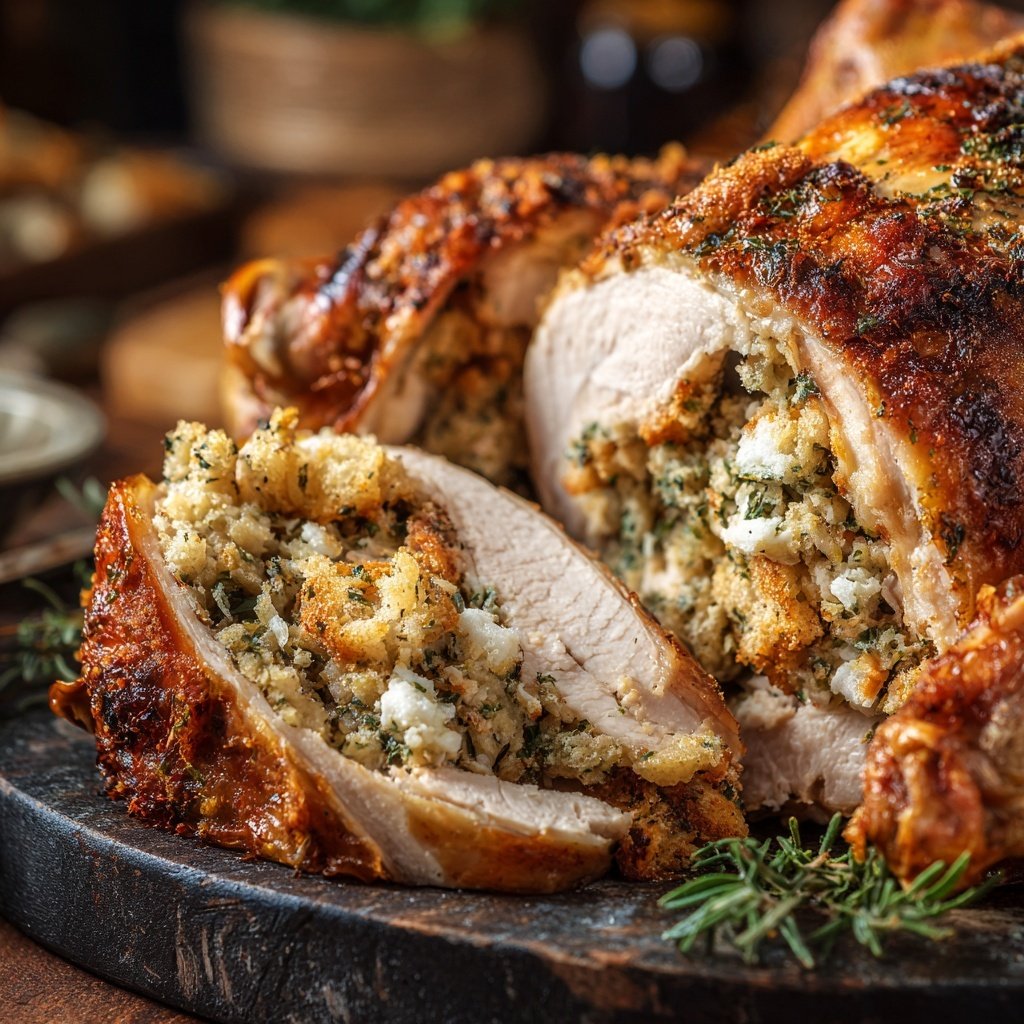
Every Thanksgiving, I take pride in crafting the perfect herb-stuffed turkey, incorporating fresh herbs that evoke the essence of fall. This year, I experimented with a blend of rosemary and thyme, which created an aromatic infusion that filled my kitchen. I also found that letting the turkey rest before carving helps redistribute the juices, ensuring each slice is moist and flavorful.
One essential tip I learned is to avoid overcooking, as it can lead to dryness. Using a meat thermometer ensures that the turkey reaches the ideal internal temperature without compromising texture or taste. The combination of flavors really shines through!
Why You'll Love This Recipe
- Deliciously moist turkey infused with fresh herbs.
- Perfectly balanced stuffing that complements the turkey.
- A centerpiece that creates an unforgettable Thanksgiving.
Choosing the Right Turkey
When selecting a turkey for this recipe, aim for a fresh or high-quality frozen bird, as they typically offer superior flavor and moisture. A 12- to 14-pound turkey is an excellent size for a family gathering, yielding plenty of meat and leftovers. For an extra layer of flavor, consider opting for Heritage or organic turkeys, which are known for their rich taste and better texture. Be sure to thaw a frozen turkey in the refrigerator for 24 hours per 4-5 pounds to ensure even cooking.
It's also important to check the label for any added solutions or preservatives, as these can affect the taste of your dish. Whenever possible, choose a turkey with no added sodium or flavors; this way, you can have full control over the seasoning, enhancing the freshness of the herbs in your stuffing. If time is short, a smaller turkey can also work, but be aware that cooking times will vary.
Mastering the Stuffing
The stuffing is a crucial element of this dish, providing a savory complement to the turkey itself. To create a nuanced flavor profile, consider using a mix of different types of bread for your crumbs, such as sourdough and whole wheat. This will add depth through varying textures and tastes. Additionally, feel free to customize the herb proportions based on your preferences; for instance, if you love rosemary, increase that amount slightly while reducing thyme.
Also, ensure the stuffing is moist but not overly wet; it should hold together when squeezed without being soggy. You can test the consistency by frying a small portion in the skillet and tasting it. If it feels dry, add more broth gradually. Remember that the stuffing will continue to absorb moisture while roasting, so remove it from the heat as soon as it’s well combined.
Serving and Leftover Tips
Perfectly carved turkey should showcase moist, tender slices that retain their juices. Use a sharp carving knife and a steady hand; start by removing the legs and thighs before slicing the breast meat. For the best presentation, layer the turkey on a large platter, garnished with fresh herbs, and serve alongside your seasonal sides. You can also offer gravy made from the drippings, adding richness that complements the stuffing beautifully.
Leftovers can be a delightful treat if stored correctly. Aim to refrigerate any leftover turkey within two hours of serving, keeping it in an airtight container. Sliced turkey can last in the fridge for up to 4 days or be frozen for up to 4 months. To reheat, gently warm the slices in a covered dish with a little broth in the oven, preserving moisture and flavor, and avoid the microwave to prevent a rubbery texture.
Ingredients
Ingredients
Gather all the fresh herbs and ingredients you need for this turkey recipe.
For the Turkey
- 1 whole turkey (12-14 pounds)
- 4 cups bread crumbs
- 1 cup onion, chopped
- 1 cup celery, chopped
- 1/2 cup fresh parsley, chopped
- 1/4 cup fresh rosemary, chopped
- 1/4 cup fresh thyme, chopped
- 1/2 cup unsalted butter, melted
- 2 cups turkey or chicken broth
- Salt and pepper to taste
Ensure everything is fresh, as this will enhance the flavor of your stuffed turkey!
Instructions
Preparation Steps
Follow these instructions carefully for the best results.
Prepare the Stuffing
In a large skillet, melt the butter over medium heat. Add the onions and celery, sautéing until soft. Stir in the bread crumbs, parsley, rosemary, thyme, salt, and pepper. Gradually add the broth until the mixture is moist but not soggy.
Stuff the Turkey
Preheat your oven to 325°F (165°C). Pat the turkey dry and season inside and out with salt and pepper. Fill the cavity with the stuffing, being careful not to overpack.
Roast the Turkey
Place the turkey on a roasting rack in a pan. Roast, basting occasionally, for about 3 hours or until the internal temperature reaches 165°F (74°C) in the thickest part of the thigh.
Rest and Serve
Once done, let the turkey rest for 30 minutes before carving. This allows the juices to redistribute for maximum flavor.
Don't forget to enjoy the festive atmosphere while cooking!
Pro Tips
- For the best flavor, use fresh herbs instead of dried. You can also add dried fruits like cranberries to the stuffing for a sweet touch.
Herb Selection and Freshness
Using fresh herbs is vital for elevating the flavors of your Thanksgiving turkey. Fresh parsley adds brightness, while rosemary contributes an earthy pine note. Thyme’s subtle sweetness rounds out the mixture, creating a stuffing that's aromatic and engaging. If fresh herbs are hard to find, remember that dried herbs can be used but should be adjusted; generally, use one-third of the dried amount called for with fresh herbs, as dried herbs are more concentrated.
To achieve the best flavor, chop herbs just before use, releasing their essential oils for maximum impact. This technique applies particularly to rosemary and thyme, where their flavor can diminish quickly once cut. If you're preparing the stuffing in advance, add the herbs shortly before stuffing the turkey to maintain their brightness and potency.
Basting and Cooking Techniques
Basting is a key technique for ensuring a juicy turkey, but it can also be mismanaged. Baste your turkey every 30 to 40 minutes with its own juices, which helps to crisp the skin and maintain moisture. Avoid opening the oven door too frequently, as this drops the temperature; instead, use a baster to reach around the legs and wings for better coverage while minimizing heat loss.
Another technique to consider is covering the turkey for the first hour of roasting to keep it moist, then removing the cover for the remaining time to allow the skin to brown beautifully. If the skin is browning too quickly, lightly tent the turkey with aluminum foil to prevent burning while the interior finishes cooking.
Custom Variations and Pairings
Don't hesitate to give your stuffing a personal twist! Consider adding sautéed mushrooms or chopped apples for additional texture and subtle sweetness. For a Mediterranean flair, include olives and sun-dried tomatoes. Explore the spice profile by introducing a hint of nutmeg or a touch of cayenne for warmth. These small adjustments can transform the dish into a unique signature for your Thanksgiving feast.
When it comes to side dishes, pairing this turkey with seasonal vegetables like roasted Brussels sprouts or mashed sweet potatoes complements the herbaceous stuffing wonderfully. A bright cranberry sauce can also add a refreshing contrast against the rich flavors, balancing out the meal beautifully, while a crisp, green salad can lighten up the heaviness of the turkey and stuffing.
Questions About Recipes
→ Can I use a frozen turkey?
Yes, just be sure to thaw it completely in the refrigerator before cooking.
→ What if I don’t have fresh herbs?
You can use dried herbs, but use about one-third of the amount since dried herbs are more concentrated in flavor.
→ How long should I cook a turkey per pound?
A general rule is about 13 minutes per pound at 325°F (165°C) when roasting unstuffed.
→ Is it safe to stuff the turkey the night before?
It's best to prepare the stuffing and turkey on the same day to prevent any food safety issues.
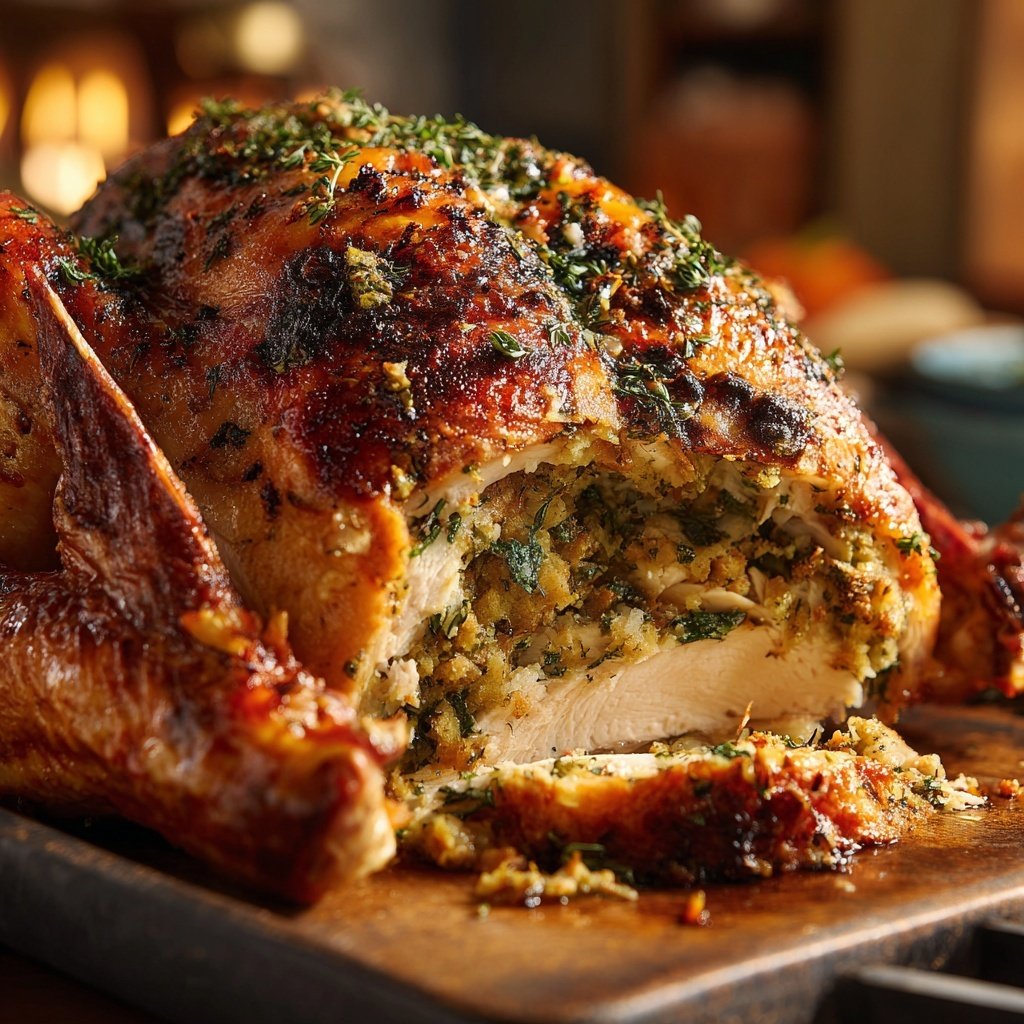
Seasonal & Festive Thanksgiving Herb Stuffed Turkey
Created by: Amber Walsh
Recipe Type: Seasonal Traditions
Skill Level: Intermediate
Final Quantity: 10 servings
What You'll Need
For the Turkey
- 1 whole turkey (12-14 pounds)
- 4 cups bread crumbs
- 1 cup onion, chopped
- 1 cup celery, chopped
- 1/2 cup fresh parsley, chopped
- 1/4 cup fresh rosemary, chopped
- 1/4 cup fresh thyme, chopped
- 1/2 cup unsalted butter, melted
- 2 cups turkey or chicken broth
- Salt and pepper to taste
How-To Steps
In a large skillet, melt the butter over medium heat. Add the onions and celery, sautéing until soft. Stir in the bread crumbs, parsley, rosemary, thyme, salt, and pepper. Gradually add the broth until the mixture is moist but not soggy.
Preheat your oven to 325°F (165°C). Pat the turkey dry and season inside and out with salt and pepper. Fill the cavity with the stuffing, being careful not to overpack.
Place the turkey on a roasting rack in a pan. Roast, basting occasionally, for about 3 hours or until the internal temperature reaches 165°F (74°C) in the thickest part of the thigh.
Once done, let the turkey rest for 30 minutes before carving. This allows the juices to redistribute for maximum flavor.
Extra Tips
- For the best flavor, use fresh herbs instead of dried. You can also add dried fruits like cranberries to the stuffing for a sweet touch.
Nutritional Breakdown (Per Serving)
- Calories: 400 kcal
- Total Fat: 20g
- Saturated Fat: 9g
- Cholesterol: 90mg
- Sodium: 120mg
- Total Carbohydrates: 25g
- Dietary Fiber: 2g
- Sugars: 2g
- Protein: 30g