Classic French Croissants
Highlighted under: From the Oven
I had always been intimidated by the thought of making croissants at home, but after trying my hand at this recipe, I realized that the process is both manageable and rewarding. The key is in the careful folding and rolling of the dough to create those flaky layers. I love how the aroma fills the kitchen as they bake, and each bite transports me to a quaint café in Paris. Trust me, once you master this recipe, you'll feel a sense of accomplishment and delight with every warm, buttery croissant you pull from the oven.

When I first tried baking croissants, I was astounded by how transformative the dough can be with just a few simple ingredients. The key is to keep everything cold and to really take your time with the folding process to create those signature layers. I can still remember the first time I pulled a batch from the oven—the golden color and the irresistible smell were simply heavenly.
To ensure the best texture, I recommend using high-quality butter, as it plays a crucial role in creating that flaky, tender crumb. Also, be patient during the rising times; they are essential for achieving the light, airy structure reminiscent of croissants from a Parisian bakery.
Why You'll Love This Recipe
- Buttery, flaky layers that melt in your mouth
- Freshly baked aroma that transforms your kitchen
- Perfect for breakfast or a cozy afternoon treat
Understanding the Lamination Process
Laminating the dough is crucial for achieving those iconic flaky layers. When you incorporate the cold butter into the dough, you're essentially creating layers of dough and fat that will expand during baking. Each fold and roll traps air, resulting in a puffed and airy croissant. Aim for equal thickness when rolling out the dough to ensure consistent baking. If the dough becomes too soft or warm, pop it back in the fridge for a few minutes to maintain its structure and make it easier to handle.
One tip I’ve found helpful is to use a bench scraper while laminating. It allows you to lift and shape the dough without tearing it. Be sure to dust your work surface and rolling pin with flour to prevent sticking, but don't overdo it—too much flour will affect the dough's texture.
Egg Wash: The Finishing Touch
Applying an egg wash before baking not only enhances the croissants' golden-brown color but also adds a beautiful sheen that makes them irresistible. To achieve this, mix one egg with a tablespoon of milk until well combined. Use a pastry brush to apply the wash gently, taking care not to deflate the risen croissants. This step is best done just before the croissants go into the oven to keep the dough light and airy.
If you're looking for a dairy-free option, consider using a mixture of plant-based milk and a cornstarch slurry to create a similar effect. While it may not yield the same glossy finish, it can still provide a lovely color.
Ingredients
For the Dough
- 500g all-purpose flour
- 10g salt
- 40g granulated sugar
- 10g instant yeast
- 300ml cold milk
- 300g cold unsalted butter
For the Egg Wash
- 1 egg
- 1 tablespoon milk
Instructions
Prepare the Dough
In a mixing bowl, combine flour, salt, sugar, and instant yeast. Gradually add cold milk until a smooth dough forms. Knead for 5 minutes until elastic. Let it rest for 30 minutes.
Incorporate the Butter
Place the cold butter between two sheets of parchment paper. Pound it with a rolling pin until it forms a rectangle about 1/2 inch thick. Chill in the refrigerator for 10 minutes.
Laminate the Dough
Roll the dough into a rectangle, then place the cold butter in the center. Fold the dough over the butter, sealing it in. Roll it out into a long rectangle, then fold into thirds. Chill for 30 minutes, repeating the rolling and folding process two more times.
Shape the Croissants
Roll out the laminated dough into a large rectangle. Cut into triangles. Starting from the base, roll each triangle to the tip. Place on lined baking sheets and let rise for 2 hours.
Bake the Croissants
Preheat the oven to 400°F (200°C). Whisk together the egg and milk for the egg wash, then brush over the risen croissants. Bake for 20-25 minutes until golden brown. Enjoy warm!
Pro Tips
- Keep your ingredients as cold as possible throughout the process for the flakiest croissants. If the butter becomes too soft, return the dough to the fridge to chill before continuing.
Storage and Reheating Tips
Croissants are best enjoyed fresh out of the oven, but if you have leftovers, store them in an airtight container at room temperature for up to two days. To keep them fresh longer, consider freezing them. Once fully cooled, wrap each croissant individually in plastic wrap and place them in a freezer bag. They can be stored for up to a month.
When you're ready to enjoy your frozen croissants, there’s no need to thaw them in advance. Preheat your oven to 350°F (175°C) and bake them for about 10-15 minutes until they are heated through and the crust is crisp. This method brings back some of that fresh-baked quality.
Troubleshooting Common Issues
If your croissants are not rising properly, check the freshness of your yeast; expired yeast won't give you the puff you’re looking for. Be sure to follow the recommended resting and chilling times, as inadequate resting can result in dense layers. If you find that your croissants are too greasy, it might be due to excess butter oozing out during the baking process—be cautious with how much butter you incorporate and ensure it remains cold throughout the laminating stages.
Another common issue is uneven baking. Rotate your baking sheets halfway through the cooking time to ensure even heat distribution, leading to beautifully golden and evenly cooked croissants.
Questions About Recipes
→ Can I freeze the croissants?
Yes, you can freeze unbaked croissants. Simply shape them and freeze before letting them rise. Bake directly from frozen, adding a few extra minutes to the baking time.
→ What type of flour is best for croissants?
All-purpose flour works well, but you can also use bread flour for a chewier texture. Just ensure it has a higher protein content.
→ How can I tell when the croissants are done baking?
They should be golden brown and sound hollow when tapped on the bottom. The internal temperature should also be around 200°F (93°C).
→ Is it necessary to use fresh yeast?
You can use either fresh or instant yeast. If using fresh yeast, dissolve it in the milk before adding it to the dry ingredients.
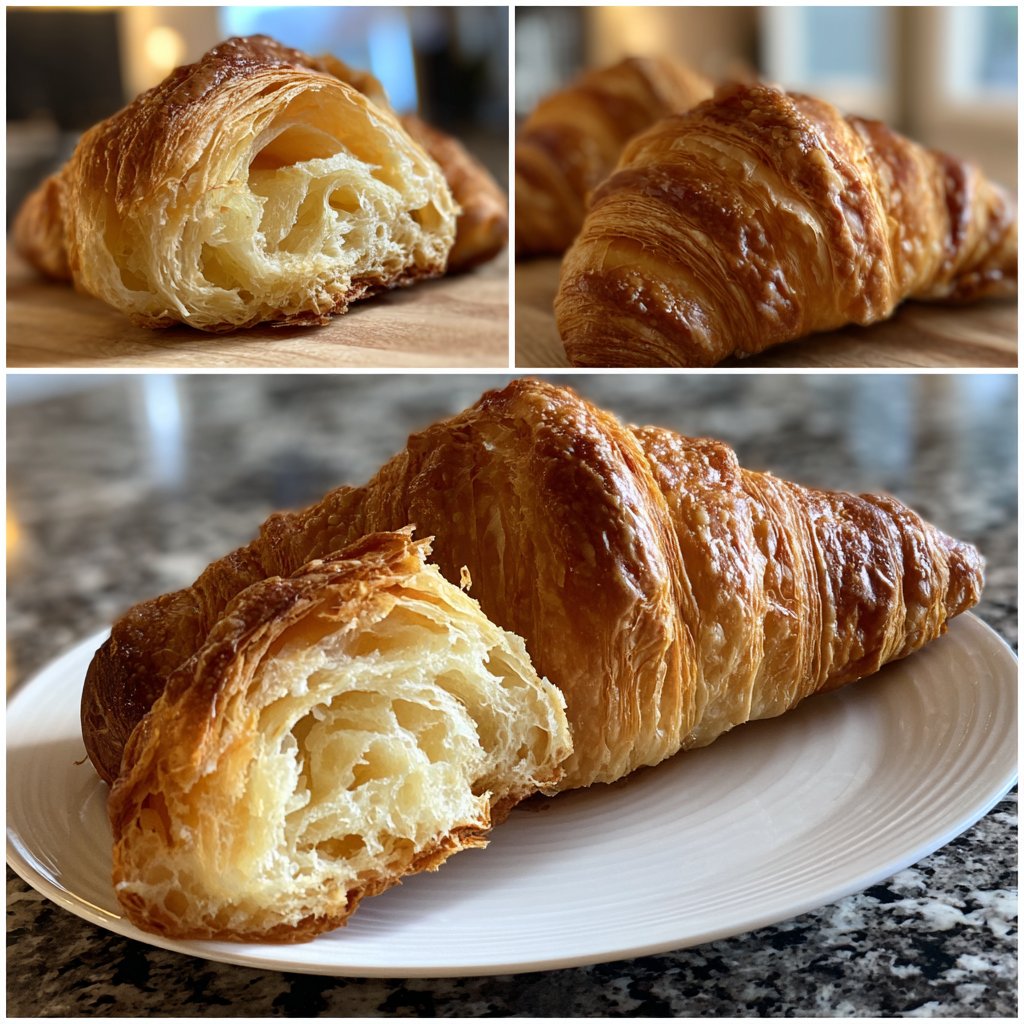
Classic French Croissants
Created by: Amber Walsh
Recipe Type: From the Oven
Skill Level: Intermediate
Final Quantity: 12 croissants
What You'll Need
For the Dough
- 500g all-purpose flour
- 10g salt
- 40g granulated sugar
- 10g instant yeast
- 300ml cold milk
- 300g cold unsalted butter
For the Egg Wash
- 1 egg
- 1 tablespoon milk
How-To Steps
In a mixing bowl, combine flour, salt, sugar, and instant yeast. Gradually add cold milk until a smooth dough forms. Knead for 5 minutes until elastic. Let it rest for 30 minutes.
Place the cold butter between two sheets of parchment paper. Pound it with a rolling pin until it forms a rectangle about 1/2 inch thick. Chill in the refrigerator for 10 minutes.
Roll the dough into a rectangle, then place the cold butter in the center. Fold the dough over the butter, sealing it in. Roll it out into a long rectangle, then fold into thirds. Chill for 30 minutes, repeating the rolling and folding process two more times.
Roll out the laminated dough into a large rectangle. Cut into triangles. Starting from the base, roll each triangle to the tip. Place on lined baking sheets and let rise for 2 hours.
Preheat the oven to 400°F (200°C). Whisk together the egg and milk for the egg wash, then brush over the risen croissants. Bake for 20-25 minutes until golden brown. Enjoy warm!
Extra Tips
- Keep your ingredients as cold as possible throughout the process for the flakiest croissants. If the butter becomes too soft, return the dough to the fridge to chill before continuing.
Nutritional Breakdown (Per Serving)
- Calories: 250 kcal
- Total Fat: 15g
- Saturated Fat: 10g
- Cholesterol: 60mg
- Sodium: 230mg
- Total Carbohydrates: 25g
- Dietary Fiber: 1g
- Sugars: 2g
- Protein: 4g